
Chapter Content
Technical Glossary: Low-Latency Systems & Protocols
24.1 Technical Glossary of Key Concepts
Understanding the technical architecture of Telegram and related projects involves several core concepts: 1. TL-Schema (Type Language): A binary serialization format and schema language designed by Nikolai Durov to describe MTProto Remote Procedure Calls (RPC) and data structures with minimal byte overhead. 2. Reproducible Builds: An engineering compilation process ensuring that distributed application binaries match the publicly available source code byte-for-byte on supported platforms. 3. End-to-End Encryption (E2EE): A communication model where cryptographic keys are exchanged strictly between client endpoints, preventing any intermediate server from decrypting messages (used in Telegram Secret Chats). 4. Client-Server Encryption: A communication model where messages are encrypted between the client and server, allowing the server to process, store, and synchronize message data across multiple devices (used in Telegram Cloud Chats). 5. KPHP: The custom compiler developed during the VKontakte era that compiles a subset of PHP into native C++ binaries.
// =========================================================================
// EDUCATIONAL EXAMPLE: Lock-Free Single-Producer Single-Consumer (SPSC) Queue
// Illustrates atomic memory ordering and lock-free thread synchronization
// =========================================================================
#include <iostream>
#include <atomic>
#include <vector>

template <typename T, size_t Capacity>
class LockFreeQueue {
private:
    std::vector<T> buffer;
    std::atomic<size_t> head{0};
    std::atomic<size_t> tail{0};

public:
    LockFreeQueue() : buffer(Capacity) {}

    bool Enqueue(const T& item) {
        size_t current_tail = tail.load(std::memory_order_relaxed);
        size_t next_tail = (current_tail + 1) % Capacity;
        if (next_tail == head.load(std::memory_order_acquire)) {
            return false; // Queue full
        }
        buffer[current_tail] = item;
        tail.store(next_tail, std::memory_order_release);
        return true;
    }

    bool Dequeue(T& item) {
        size_t current_head = head.load(std::memory_order_relaxed);
        if (current_head == tail.load(std::memory_order_acquire)) {
            return false; // Queue empty
        }
        item = buffer[current_head];
        head.store((current_head + 1) % Capacity, std::memory_order_release);
        return true;
    }
};

int main() {
    LockFreeQueue<std::string, 64> packet_queue;
    packet_queue.Enqueue("DataPacket_01");
    std::string out;
    if (packet_queue.Dequeue(out)) {
        std::cout << "[INFO] Dequeued item: " << out << std::endl;
    }
    return 0;
}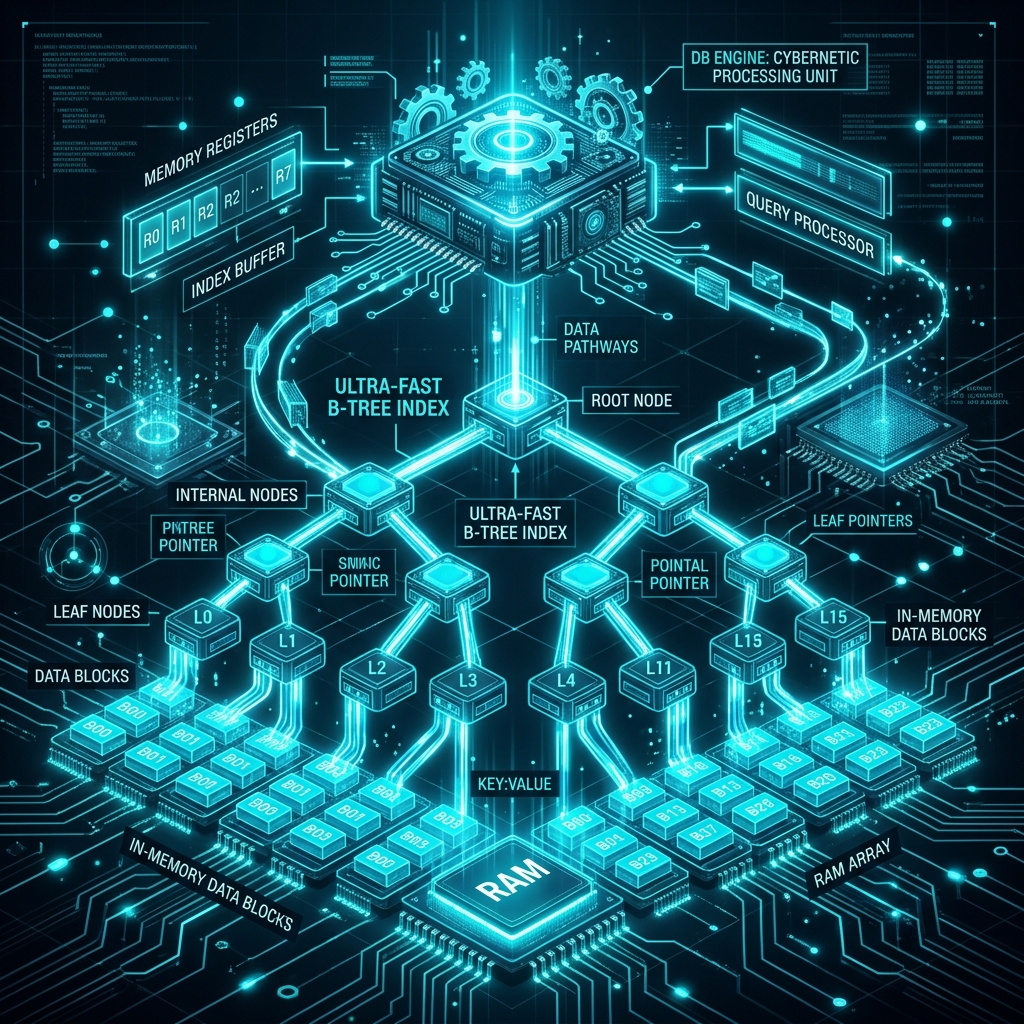
Technical diagram illustrating lock-free ring buffers, socket event polling, and memory management for network throughput.